Understanding the Science of Reading: What It Means for Instruction and Learning
Why the Science of Reading (SoR) Matters
What does it really take for children to become fluent, joyful readers? The Science of Reading (SoR) has gained significant attention in education as educators explore how children learn to read and which instruction best supports them. Ongoing research shows strong academic results, supports multilingual learners, and improves early literacy skills.
Educators and families often look for clear guidance on how to best support children as they learn to read. Below, we’ll review the research that supports reading development and explore ways to strengthen these connections in both the classroom and at home.
What Is the Science of Reading (SoR)?
The Science of Reading (SoR) is often misunderstood as a curriculum or scripted program; rather, it is a body of research that helps explain how students learn to read. It reminds us that becoming a proficient, lifelong reader involves more than recognizing words on a page. It also depends on strong language comprehension skills, including vocabulary development and background knowledge, that help students understand text. The Science of Reading (SoR) is rooted in the Simple View of Reading1, which explains that skilled reading is the result of both word recognition and language comprehension working together. Dr. Hollis Scarborough later illustrated this idea through the Reading Rope2, which shows how word recognition and language comprehension work together to help children become skilled readers.
Additionally, the National Reading Panel (2000) identified five key pillars of reading development: phonemic awareness, phonics, fluency, vocabulary, and comprehension.
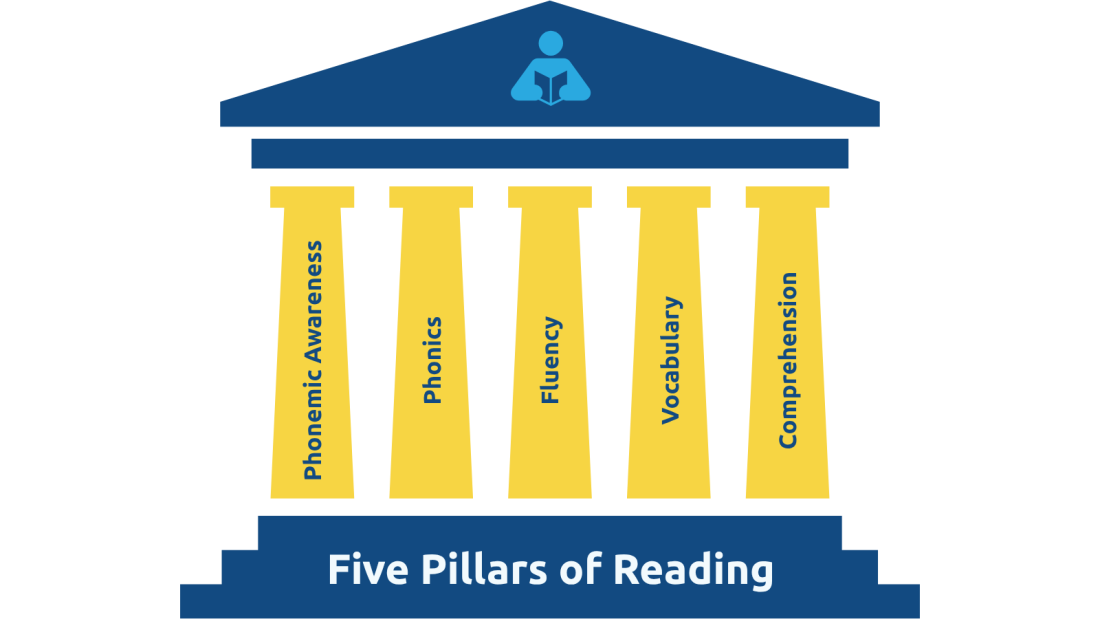
- Phonemic Awareness: the ability to hear, identify, and manipulate individual sounds in spoken words. For example, children can recognize that the word cat is made up of three sounds: /c/ /a/ /t/. This skill is all about hearing sounds in language before connecting them to print.
- Phonics: the understanding of how letters and letter patterns represent the sounds of spoken language. It helps children connect what they hear to what they see in print, allowing them to decode and read words.
- Fluency: the ability to read accurately, at an appropriate pace, and with expression. Fluent readers don’t have to focus as much on sounding out words, which allows them to better comprehend and enjoy what they are reading.
- Vocabulary: the words we know and understand when we listen, speak, read, or write. A strong vocabulary helps readers make sense of texts and express ideas more clearly.
- Comprehension: the ability to understand and make meaning from what is read. It involves thinking about the text, connecting ideas, and using background knowledge to understand what the author is saying.
These five pillars work together to support skilled reading development. Each pillar helps students move from reading words to understanding text.
What It Looks Like in Practice: Instructional Strategies
- Daily opportunities for explicit, systematic phonemic awareness and phonics instruction and practice
- Vocabulary instruction embedded in read-alouds and content learning
- Writing connected to reading (sentence-level and story-specific responses)
- Guided and independent reading with appropriate grade-level scaffolds
- Importance of assessment and responsive instruction
Connecting the Science of Reading (SoR) to RIF Resources
At Reading Is Fundamental (RIF), the Science of Reading (SoR) goes beyond understanding how children learn to read; it’s also a reminder that lifelong reading happens when research-based instruction and joyful reading experiences work together. Children thrive when they are not only building skills but also developing a personal connection to reading itself.
RIF supports SOR-aligned instruction through:
- Read-aloud resources that build vocabulary and comprehension: Interactive lessons and read-alouds expose students to rich language and complex ideas that build background knowledge and vocabulary while also creating opportunities for discussion, connection, and enjoyment.
- High-quality book access: Access to engaging, diverse books ensures that children can practice reading skills while also discovering stories and topics that spark curiosity and enjoyment. Skybrary offers a collection of 1,000+ eBooks (including 100 free titles) and 150+ educational video explorations (50 free) designed for young readers. This kids’ reading app helps build literacy skills with read-to-me narration, interactive comprehension prompts, and fun extensions. It goes beyond a traditional read-aloud experience.
- Family engagement tools and literacy activities: When families feel confident supporting reading at home, children experience reading as a shared, meaningful activity that reinforces classroom learning and builds positive reading habits.
- Professional development for educators: RIF supports educators in translating research into practice through strategies that strengthen foundational skills while also prioritizing motivation and a love of reading.
Bringing It All Together
The Science of Reading (SoR) provides a strong research base that helps us better understand how children learn to read and what supports their growth as readers. It reminds us that reading development is complex and requires attention to both foundational skills and language comprehension. When these elements work together, students are more likely to become confident, capable, and engaged readers.
Get Inspired—Read RIF's Blog
Stay connected with the heart of our mission by exploring our blog. We feature stories from communities we serve, literacy tips for educators and families, and updates on how Reading Is Fundamental is helping children across the nation discover the joy of reading.